Black and white wall art: How to create a timeless, calm interior
- Emily Black

- Aug 18
- 6 min read

Since I began my degree in Textile Design over fifteen years ago, I have developed a love for drawing in black and white only. I started with a simple black ballpoint pen and later experimented with black ink and a paintbrush. There was something about the strong contrast that allowed every pattern and texture to really stand out.
Today, I favor fine-liner pens, which allow me to change the quality and density of my lines to suit the subject I am drawing (see image below for example).

I have always been told that my style would suit tattoo art. Although meant as a compliment, I want to make sure my art can sit beautifully within calm, organic-modern homes. This is why I now adjust each finished hand-drawn illustration, toning down the contrast to create a softer charcoal and ivory palette.
When studying each flower, leaf and petal, I tend to focus on the architecture and forms that make up nature's sculptures. I love the modern feeling this creates alongside the more traditional quality of hand-drawn artwork.
I guess you could say I am slightly obsessed with contrast! Light and dark, soft and heavy, modern and traditional.
Black and white can bring a very different feeling to each artwork. It can create a sense of timeless sophistication, or perhaps a more haunting, gothic or vintage feeling. Whatever mood it creates, the focus remains on the botanical subject itself and its natural beauty, highlighting shapes and details that might otherwise be overlooked amongst the noise of color.

Why choose black and white wall art?
Timeless
Black and white doesn't depend heavily on changing color trends, meaning the artwork can grow with you and your home rather than feeling tied to a particular interior trend.
Versatile
Monochrome art blends beautifully with different interior styles, from Scandinavian minimalism to modern organic and cottage-core spaces.
Calming
A restrained palette of softened charcoal and ivory can help a room feel considered rather than visually busy.
Easy to layer
Black and white artwork works beautifully alongside wood, linen, stone, ceramics and other natural materials.
Adds contrast
Dark line-work can provide definition against pale walls and neutral furniture without feeling like it is too much.
When I create wall art, each piece begins with a close study of a real botanical subject and an original hand-drawn illustration. I try to capture as much texture and line detail as possible to represent the individual features of each species that inspires me.
Unlike computer-generated artwork, hand-drawn art can bring a feeling of the rawness of nature into a space, while still applying restraint and purpose to each piece.

Black and white doesn't have to be stark
A common misconception about black and white interiors is that they can feel cold or harsh. But there is a huge difference between high-contrast black and brilliant white and soft charcoal, warm ivory and natural materials.
By layering in woven textures, tonal neutral linens, stone, natural wood and hints of muted greens or terracotta, you can create a calm sanctuary, with botanical wall art providing a floral focal point that feels purposeful within the space.

Styling black and white botanical wall art
Above a sofa
Using one larger-scale piece of art, such as an 18" x 24" print from my store, can create a strong focal point for the room. Alternatively, a group of three framed pieces can fill the space while still allowing each artwork to breathe.
In a bedroom
Focus on creating a quiet, restful feeling by incorporating minimal artwork and leaving plenty of space around the focal piece.
In an entryway
Set the tone for your home by incorporating monochrome art that makes a small entrance feel intentional without overwhelming it.
In a home office
Choose a piece that offers strength and focus to create a "positive vibes only" office space, even on a Monday morning! Monochrome art introduces a connection to nature without the distraction of lots of color.
How to create a black and white gallery wall

Keep the color palette consistent
Black, white, charcoal and ivory tones can be mixed together without making the wall feel chaotic.
Mix different botanical forms
Celebrate the different structures found in nature by mixing a collection of leaves, close-up botanicals and minimal single-stem flower artwork.
Vary the scale
Create visual interest by combining pieces of different sizes, from a larger statement piece to smaller-scale works.
Consider the frames
A black wooden frame will create a contemporary look with stronger contrast, while natural wood or lighter frames can create a softer, more organic feel.
Leave breathing room
Don't feel that every inch of the wall needs to be filled. Space is key when styling modern, organic spaces.
What colors work well with black and white artwork?
Warm white = Soft and understated
Beige = Warm and sophisticated
Greige = Modern and elegant
Sage green = Natural and balanced
Terracotta = Adds warmth
Natural wood = Organic and relaxed
Charcoal = Dramatic and sophisticated
Soft blue = Calm and understated
Earth tones with a connection to nature are particularly effective at enhancing botanical art without the need for strong or overpowering color accents.

Choosing the right size of wall art
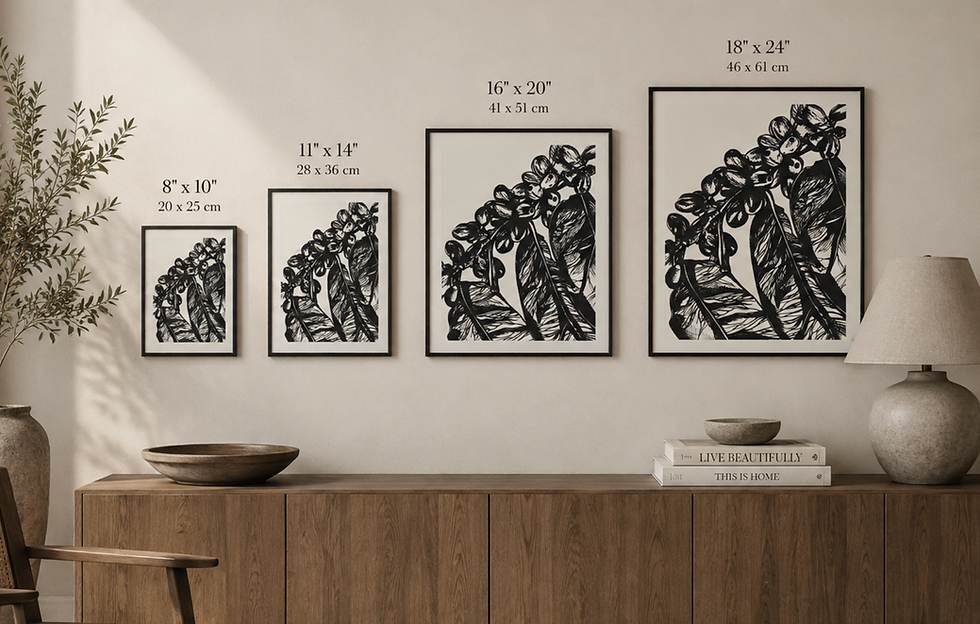
Small artwork (8"x10")
A great size for styling on shelves amongst handmade ceramics and plants. Small prints are also perfect for bedside tables, adding a touch of nature to a relaxing room, or for bringing interest to a smaller wall space.
Medium artwork (11"X14")
A useful size for framing above a desk, console or smaller piece of furniture.
Large artwork (16"X20" & 18"X24")
Larger artwork is great for creating a focal point in a room. Try placing a larger piece above a sofa, dining table, bed or another substantial piece of furniture.
Why botanical artwork works particularly well in monochrome
Botanical subjects naturally include intricate patterns, textures and details that can sometimes get lost amongst the eye-catching colors that adorn them.
Black and white allows us to look closer and appreciate the whole architecture of a flower head, the vein patterns of a leaf and the structures that make up a cluster of berries.
If you were to take a close-up photograph of a flower or leaf in color and then turn that exact same photograph into black and white, you might notice how your eye is drawn to details that you had missed before.
Each piece available in my store began with a real-life observation and a hand-drawn pen-and-ink illustration.

How to create a calm, collected look
When styling any home interior, the key is more often than not about creating balance (unless eclectic maximalism is your thing, in which case I'm not sure you would be here!)
By combining monochrome, nature-inspired art with natural materials, soft earth tones and warm textiles, the result can be a thoughtful, collected room. By allowing space around each piece and being intentional about its placement, you can create a feeling of calm.
Black and white wall art can be one of the simplest ways to introduce character, structure and natural beauty into a home.
If you're looking for botanical artwork that combines traditional hand-drawn illustration with a contemporary monochrome aesthetic, explore the Emily Black Designs collection.


Comments